NauticPanels logo
EN DE
Request a quote
  1. Home
  2. 12V / 24V Panels
12 V and 24 V

12V boat switch panels and 24V marine switch panels, built around your circuits

NauticPanels builds custom 12V boat switch panels and 24V marine switch panels for owners, yards and boat builders. Every panel is drawn from a photo of your helm, laser engraved, fitted with IP67 push buttons and, if you wish, thermal circuit breakers, USB chargers and 12 V sockets.

12V and 24V DCResettable thermal breakersUSB A/C 4.8 AIP65 panel
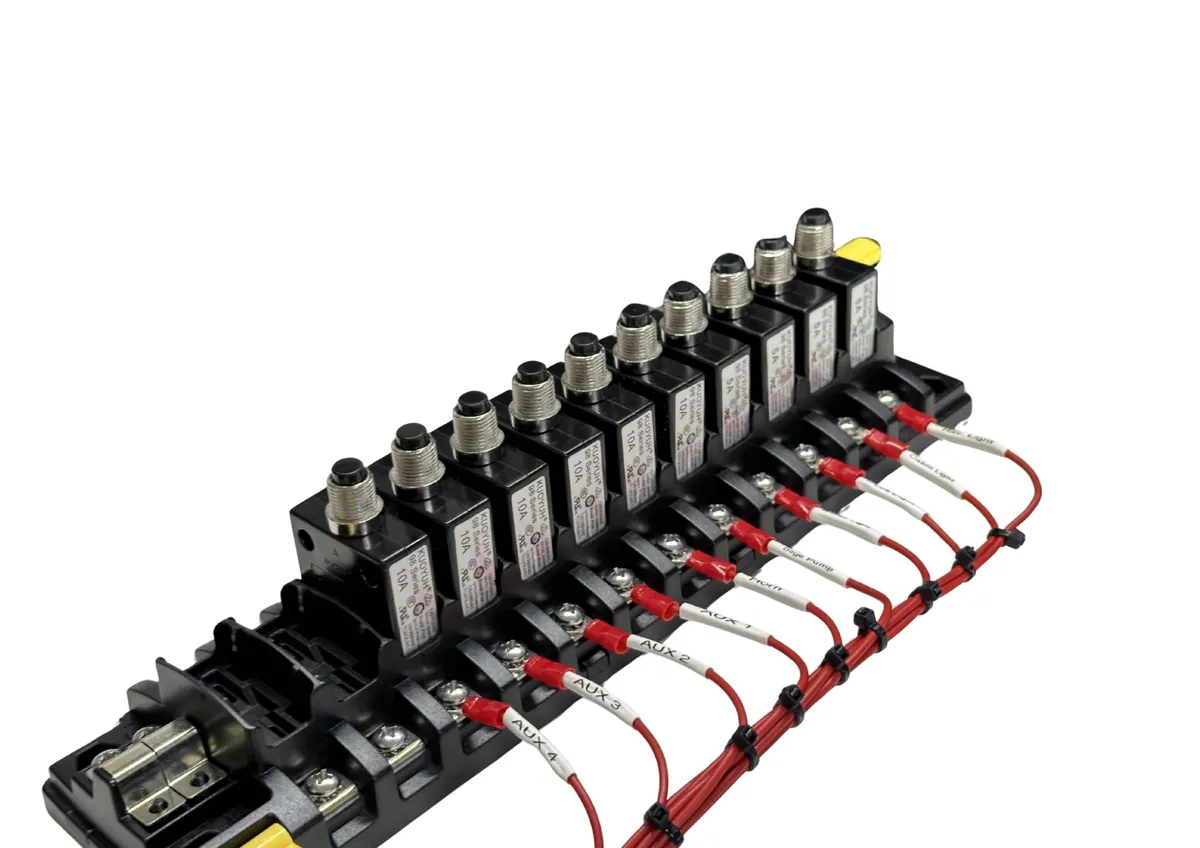
12V boat switch panel with a row of resettable thermal circuit breakers and labelled wires

12 V or 24 V: what changes on the switch panel

Most boats run a 12 volt DC system; many larger yachts and commercial craft run 24 volt. A 12V boat switch panel and a 24V marine switch panel from NauticPanels are built the same way: marine grade acrylic, laser engraved labels, IP65, stainless steel push buttons. What changes is the specification of the parts behind the front plate.

  • Push buttons: the catalogue rates the LED push buttons at 15 A at 12 V; the project panels built with them are listed as 12 V / 24 V DC compatible.
  • Circuit breakers: thermal breakers are chosen per circuit, from 5 to 20 A, not per system voltage.
  • LED rings, indicators and backlight: these are specified for the voltage of your system, so we need to know whether the panel sits on 12 V or 24 V before we draw it.

If your boat has both, for example a 24 V service bank and 12 V electronics, note the voltage next to each consumer on the worksheet below.
Circuit protection on the panel: resettable thermal breakers

A DC panel protects as well as switches. Our catalogue has two thermal circuit breaker types, type 1 and type 2, both 11 mm, rated from 5 to 20 A, with a rubber head rated IP65. They are resettable: after an overload you press the breaker back in instead of replacing a fuse.

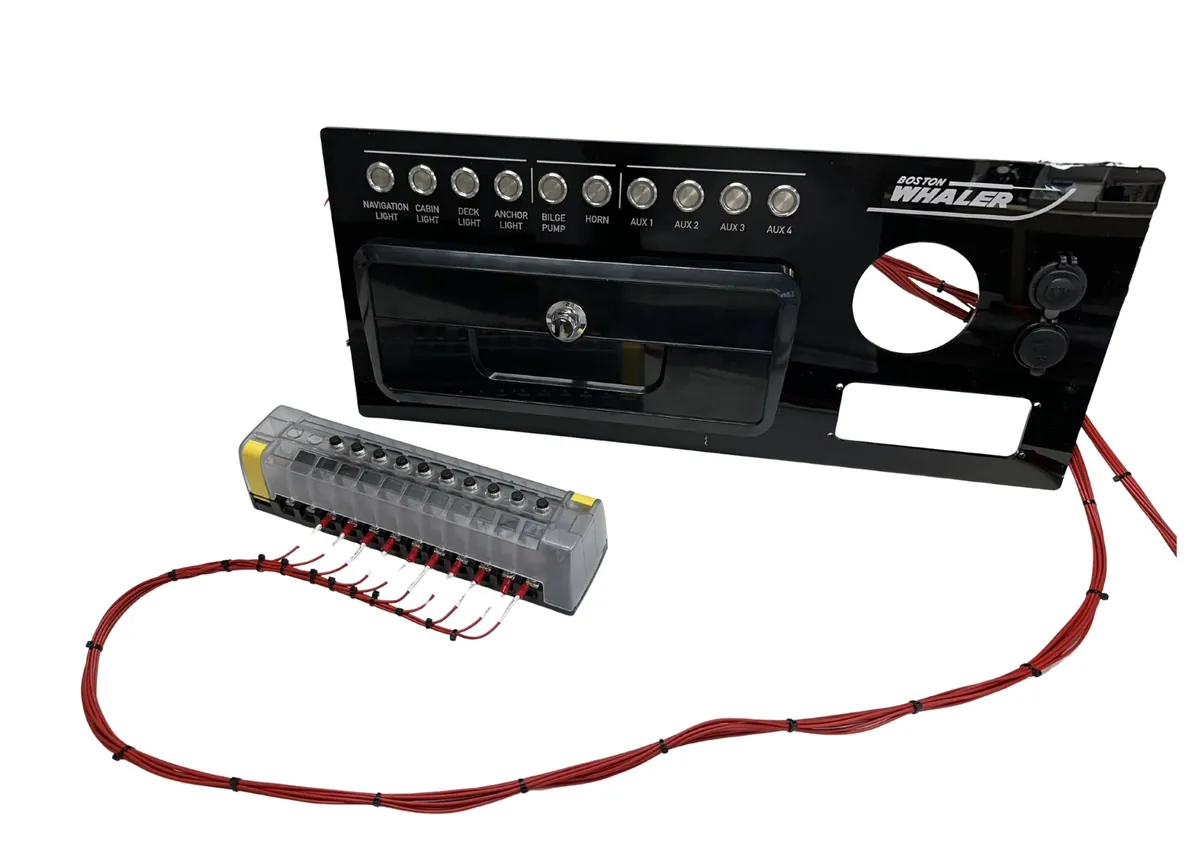
For a Boston Whaler sport boat we built a helm panel in which all circuits run through a centralised connection module with resettable thermal breakers. It protects against overload, allows a quick reset without replacing a component, and reduces maintenance effort compared with a conventional fuse based setup. The panel came with a pre-assembled harness and an Evinrude interface.

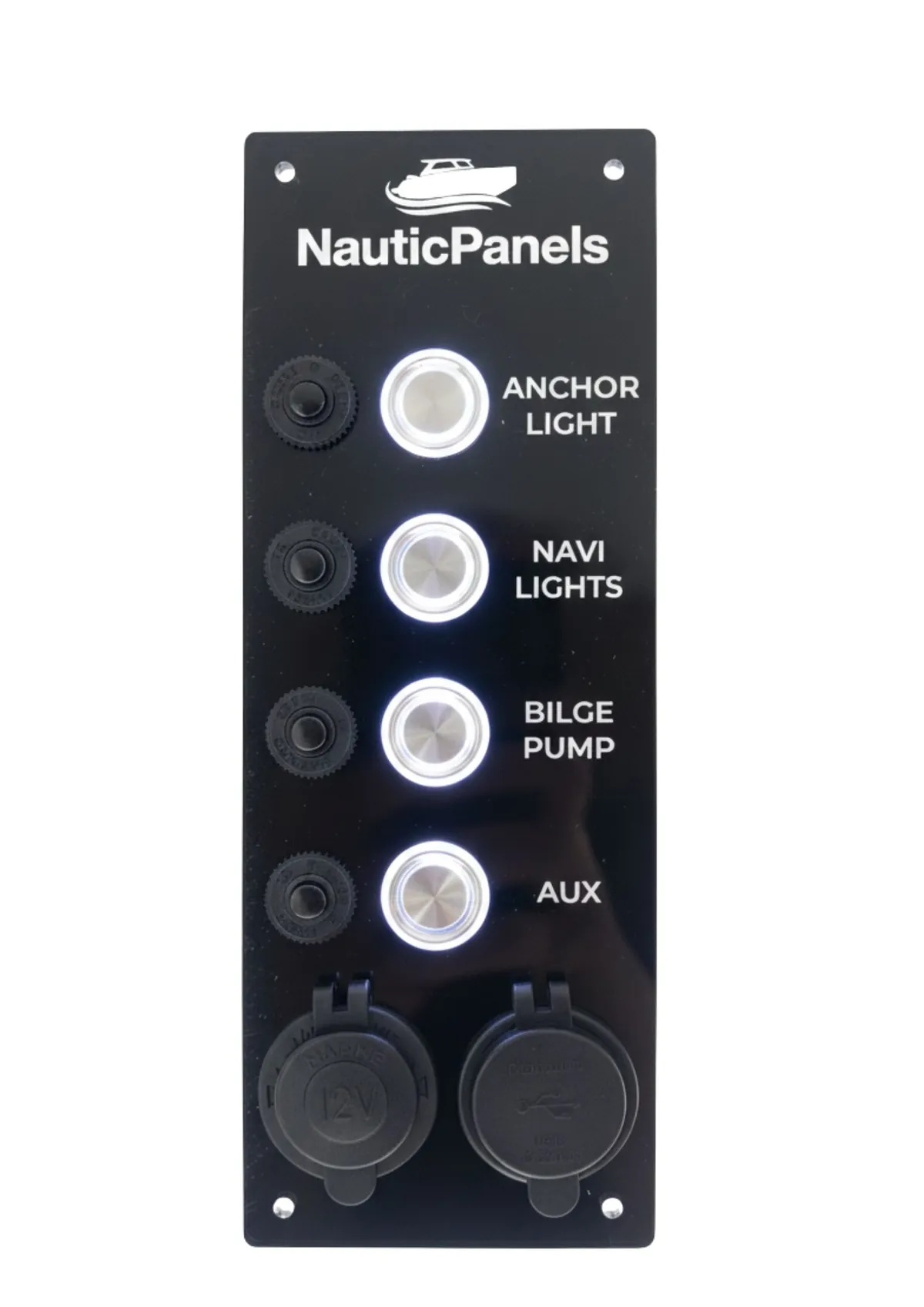
For a smaller sport boat we integrated the circuit protection into the panel itself, with one resettable breaker per function next to the push buttons. Each circuit is individually protected and clearly assigned.

Boston Whaler 12V boat switch panel with wiring harness and terminal block
Boston Whaler helm panel with pre-assembled harness and terminal block.

USB chargers and 12 V sockets on a 12V boat switch panel

Two accessories from the catalogue go onto nearly every 12V boat switch panel we draw. The USB A/C charger delivers 4.8 A, comes in 29 or 37 mm mounting sizes and is rated IP65 when closed. The 12 V plug socket is rated 20 A, in the same 29 or 37 mm sizes, and is also IP65 when closed.

Both fit into the same acrylic front as the push buttons, so the panel for an outside helm station can carry USB, AUX and a 12 V socket next to the switches, as we did for a pontoon boat. A compact four button panel with USB charger and 12 V socket is a common request for small open boats.

Because the panel is custom drawn, sockets go where the cable will actually run.

Compact 12V boat switch panel with push buttons, USB charger and 12 V socket
Push buttons, USB A/C charger and 12 V socket on one compact panel.

Planning your circuits: a short worksheet

Before we draw the panel, we need to know what it switches. A list like this avoids a second round of changes later.

  1. Consumer: list every item the panel should control, from navigation lights to the bilge pump.
  2. Voltage: 12 V or 24 V for each consumer.
  3. Protection: whether the circuit needs a thermal breaker on the panel (5 to 20 A) or is protected elsewhere, and the amp rating.
  4. Switch type: on/off or on/off/on2, momentary or latching, push button or Carling Contura rocker.
  5. Feedback: LED ring in the button, a separate LED indicator (3 mm built in or 6 mm surface), or none.
  6. Label: the text or symbol to engrave, in the language the crew uses.
  7. Extras: USB charger, 12 V socket, display cut-outs, backlight.

Send the list with a photo and the outer dimensions of the old panel, and you receive a scale drawing with a quote. Changes at that stage are free.

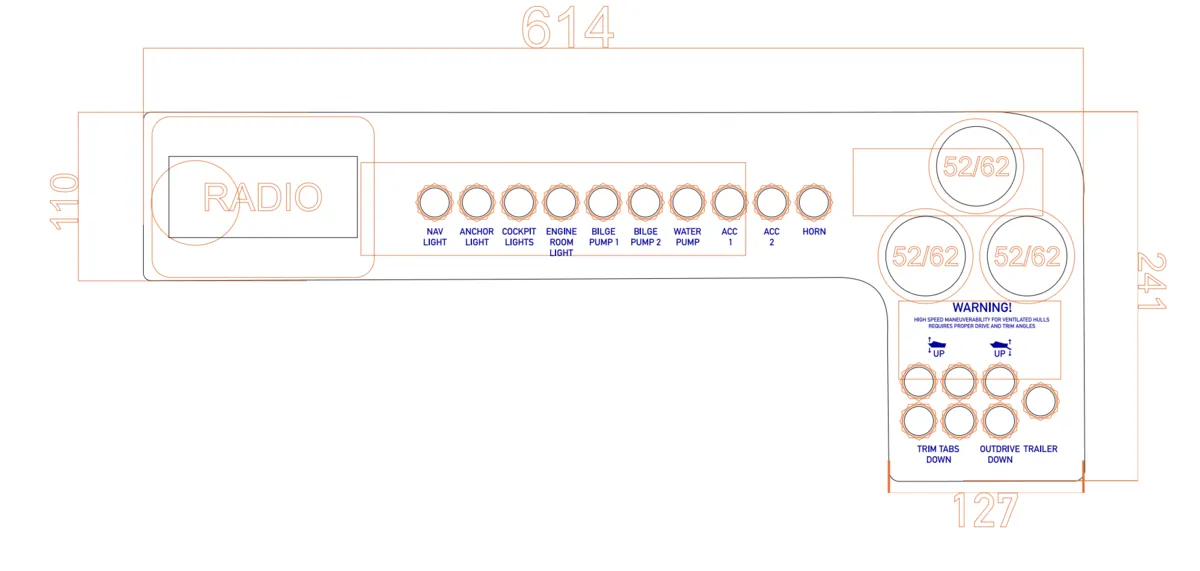
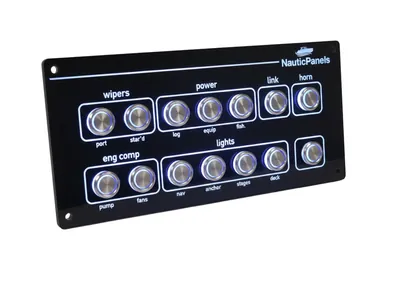
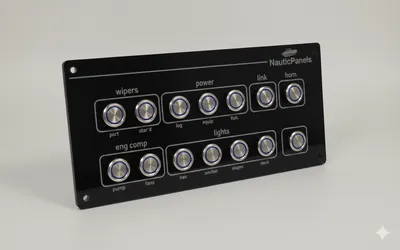
Scale drawing of a new 12V boat switch panel with all circuits
Step 2: scale drawing with all circuits, ready for your comments.

Switchboard or helm panel: where the circuits live

On many boats the switching is split. The helm panel carries what the helmsman needs under way: lights, wipers, horn, windlass, pumps. A switchboard at the chart table or in a locker carries the distribution for the whole boat, with breakers and bus bars behind it.

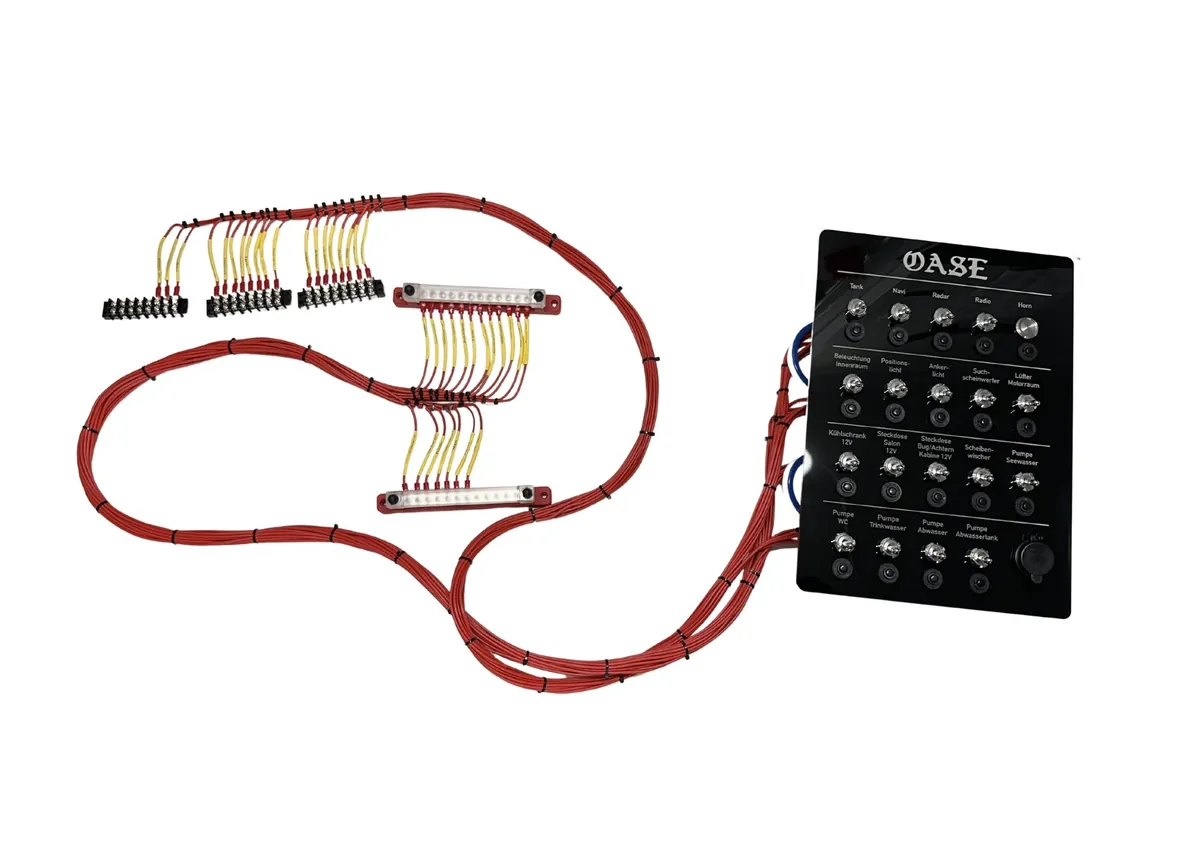
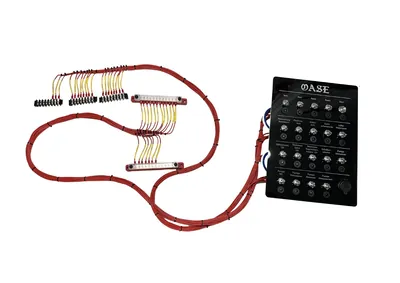
The switchboard we built for the yacht Oase shows the second type. It is a full distribution panel with a pre-assembled harness and bus bars behind the acrylic front, blue backlit through the engraved lettering so every circuit can be read at night. Push buttons, engraving and IP65 acrylic are the same as on a helm panel; the difference is the wiring behind it.

We build either, or both for one boat. See our pre-wired panels page for the back of the panel and our push button page for the switches.

Switchboard for the yacht Oase with wiring harness and bus bars
Switchboard for the yacht Oase with harness and bus bars.

Indicators and backlight on a DC panel

Two optional parts make a DC panel easier to read. LED indicators from the catalogue, built in at 3 mm or surface mounted at 6 mm, come in several colours and can show the state of a circuit switched elsewhere on the boat.

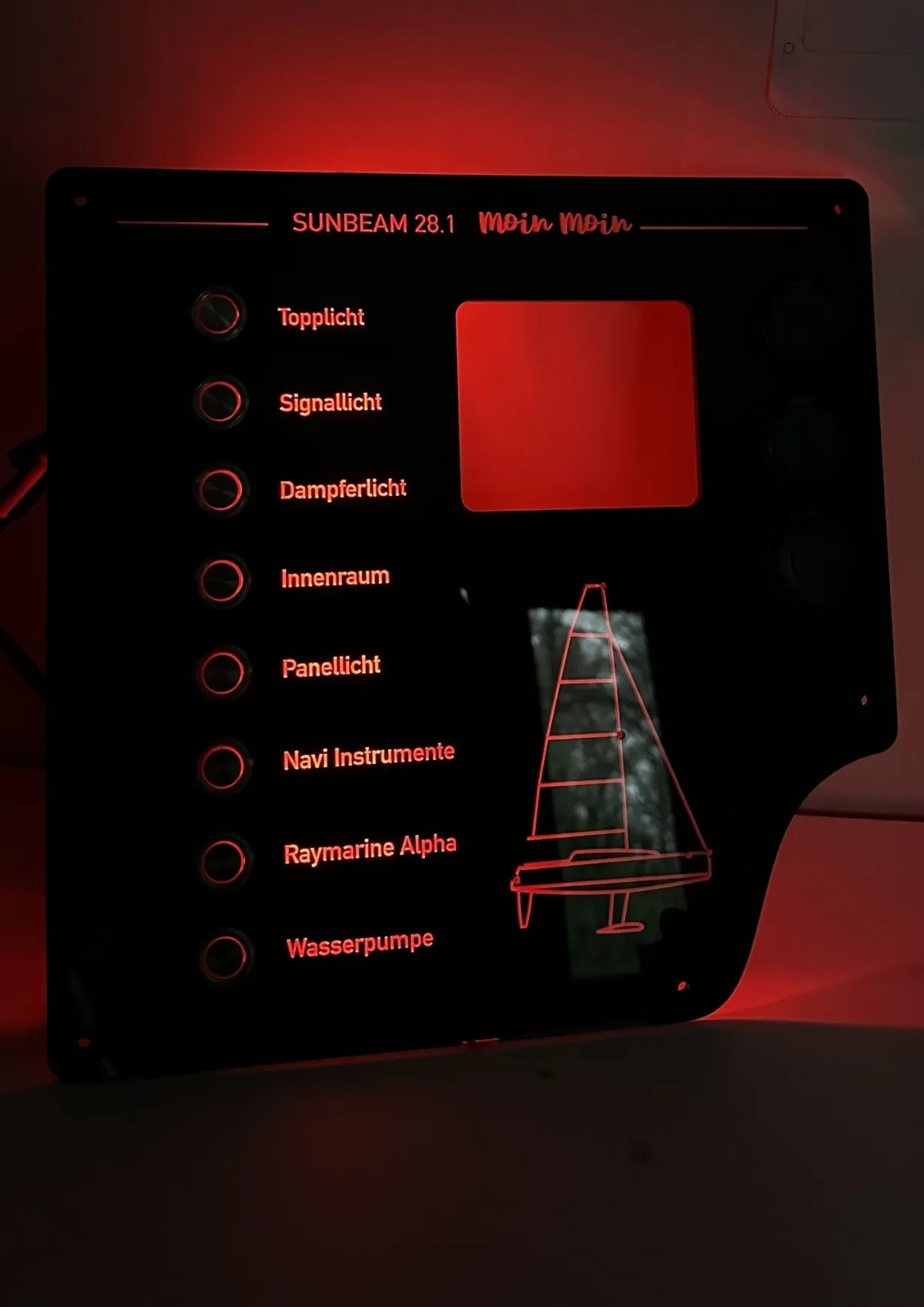
The backlight is optional and runs through the engraved lettering and graphics, in blue or red for example. The Sunbeam 28.1 helm panel is red backlit with engraved graphics and a display cut-out; the Oase switchboard is blue. Like the LED rings, the backlight is specified for your system voltage.

Red backlit Sunbeam 28.1 helm panel with engraved graphics and display
Sunbeam 28.1: red backlit helm panel with engraved graphics.

12 V and 24 V panel components from the catalogue

Electrical system12 V or 24 V DC
Push buttonsStainless steel, LED ring, 15 A at 12 V, IP67
Thermal breakersType 1 and 2, 11 mm, 5 to 20 A, resettable, rubber head IP65
USB chargerUSB A/C, 4.8 A, 29 or 37 mm, IP65 when closed
12 V socket20 A, 29 or 37 mm, IP65 when closed
LED indicatorsBuilt in 3 mm or surface 6 mm, several colours
Panelmarine grade acrylic, laser engraved, IP65
BacklightOptional, e.g. blue or red, through engraved lettering
DeliveryBare, with switches fitted, or fully pre-wired
Questions and answers

Frequently asked questions

Is a 24V marine switch panel different from a 12V boat switch panel?

The front plate is the same: marine grade acrylic, laser engraved, IP65, with the same stainless steel push buttons. The parts behind it are specified for your system voltage, in particular LED rings, indicators and backlight. Tell us the voltage when you send the photo.

What is the push button rating at 24 V?

The catalogue rates the LED push buttons at 15 A at 12 V, and the project panels built with them are listed as 12 V / 24 V DC compatible.

Thermal breaker or fuse?

A thermal breaker trips on overload and is reset by pressing it back in; a fuse has to be replaced. The breakers in our catalogue are 11 mm, rated 5 to 20 A, with an IP65 rubber head, and mount in the panel next to the switches. On the Boston Whaler project this replaced a conventional fuse based system.

Does every circuit need its own breaker on the panel?

Not necessarily. If the boat already has a protected distribution board, the panel can switch only, as many refit panels do. If you want protection at the helm, we fit one resettable breaker per circuit, in the panel front or in a connection module behind it.

Can I add a USB charger and a 12 V socket to the panel?

Yes. The USB A/C charger delivers 4.8 A and the 12 V plug socket is rated 20 A; both come in 29 or 37 mm and are IP65 when closed. They are drawn into the panel like any other cut-out.

What is the difference between a switchboard and a helm panel?

A helm panel carries the functions used while driving the boat and sits at the wheel. A switchboard carries the distribution for the whole boat, usually with breakers and bus bars behind it, and sits at the chart table or in a locker. We build both, for example the blue backlit switchboard for the yacht Oase.

How do I tell you which circuits I need?

Use the worksheet on this page and send it with a photo and the outer dimensions of the current panel. You then receive a scale drawing with a quote, and changes are free at that stage.

Send your circuit list

Email a photo of your panel, its outer dimensions and your circuit list to info@nauticpanels.com and you receive a scale drawing with a quote.